Everyone sells automation as "faster."
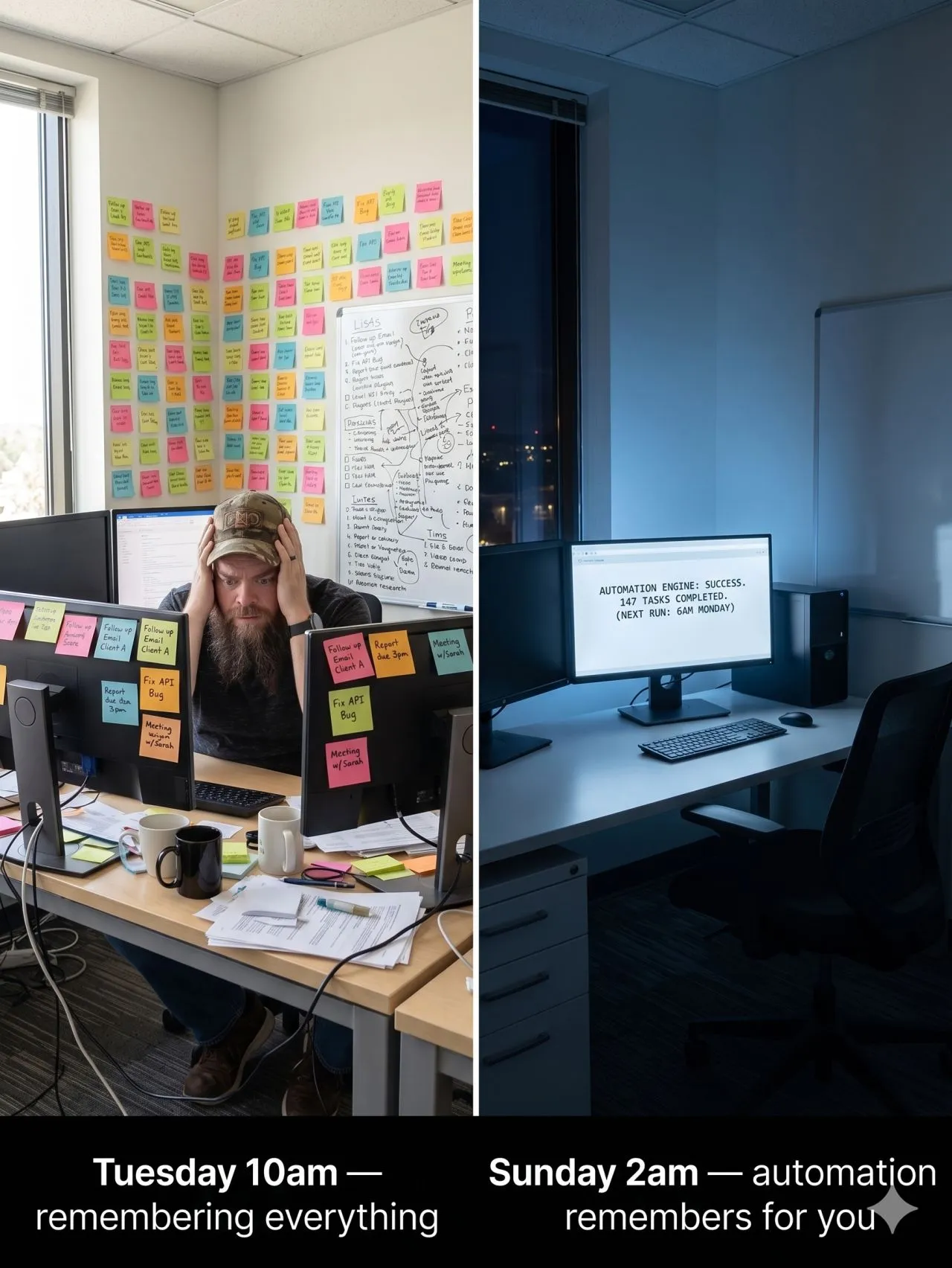
Everyone sells automation as "faster."
That's not wrong. But it's not the reason it actually changes anything for a small team.
The reason is that the process runs the same way every time. Tuesday at 10am. Sunday at 2am. Whether you remembered or forgot. Whether the person who built it is in the office, on a plane, or quit three months ago.
DocuClipper aggregated error-rate research and found humans make 100 to 400 errors per 10,000 data entries. Automated systems? 1 to 4. And a manufacturing study in the International Journal of Industrial Ergonomics found error rates climb about 40% after four hours of continuous work. Your afternoon self is measurably worse at the same job your morning self started.
An automated process doesn't have an afternoon slump or need a nap.
I talk to business owners who want to "save time" with automation. That's fine. You will. But the ones who actually get value from it? They're not measuring hours saved. They're measuring what stopped falling through the cracks.
The follow-up that used to depend on whether someone remembered. The invoice that went out on time even when the office manager was sick. The onboarding sequence that ran at 2am for a customer in Tokyo.
Small teams feel this more than anyone. You're a team of three. One dropped ball has nowhere to hide. There's no backup person, no process layer, no manager checking behind you. Automation is that layer.
But before you automate anything, map it first. IBM found 70% of automation effort goes to understanding and fixing the process before you build anything. If the process is broken, automation just makes it broken faster.
Three questions before you automate a workflow:
- Can you write it down? If you can't describe every step and decision point on paper, you don't have a process. You have a habit. Habits don't automate.
- What breaks when someone's out? That's your highest-value target. The thing that only works because one person remembers to do it.
- Where do you lose sleep? Not figuratively. Literally. What's the task you wake up at night wondering if it got done? Start there.
Judge automation by what stops slipping through the cracks. The hours are a bonus.